

Picking the wrong dog trainer can waste your money and set back your dog’s progress by months. The dog training industry has minimal regulation, which means anyone can call themselves a trainer regardless of actual qualifications or experience.
At DogingtonPost, we’ve seen firsthand how much difference the right trainer makes. This guide walks you through the key factors to evaluate before hiring, so you can find someone who’s genuinely qualified and aligned with your training goals.
What Training Methods Actually Work
The dog training world splits into three distinct camps, and understanding the differences matters because they produce vastly different results and emotional outcomes for your dog.
Positive Reinforcement: Building Behavior Through Rewards
Positive reinforcement training focuses entirely on rewarding the behaviors you want, using treats, toys, or praise to mark correct actions. This method builds on the science of operant conditioning, where dogs learn that sitting, coming, or walking calmly triggers something good. Trainers using this approach typically employ harnesses and flat collars, avoiding aversive tools altogether.
The practical advantage is clear: dogs trained this way show lower stress levels and stronger bonds with their owners. Research shows that dogs trained with aversive methods displayed more stress-related behaviors, including avoidance and fear responses.

Correction-Based Training: Why Punishment Falls Short
Correction-based or traditional training relies heavily on punishment and corrections, often rooted in outdated dominance theory that modern animal behaviorists have thoroughly debunked. These trainers may use prong collars, shock collars, or harsh leash corrections, claiming they’re necessary for stubborn dogs.
The reality is far different: punishment suppresses behavior temporarily but doesn’t teach your dog what to do instead, and it frequently creates anxiety, aggression, or learned helplessness.
Balanced Training: The Middle Ground Problem
Balanced training sits in the middle, mixing positive reinforcement with corrections as deemed necessary by the trainer. Some balanced trainers use this thoughtfully, adapting their approach to individual dogs, while others simply default to punishment whenever positive methods seem slow.
The problem with balanced training is inconsistency-without clear certification standards defining what balanced actually means, you’re gambling on whether the trainer leans toward humane methods or harsh ones.
What Equipment Reveals About a Trainer’s Philosophy
The equipment a trainer uses tells you volumes about their philosophy. Harnesses and flat collars indicate force-free, positive reinforcement work. Prong collars, choke chains, and electronic shock collars signal aversive-based training, and you should avoid trainers recommending these tools.
When evaluating a trainer’s portfolio or videos, examine how the dogs look-engaged and relaxed dogs signal good training, while dogs displaying tension, avoidance, or stress indicate harmful methods. Ask directly what tools the trainer uses and what they avoid. A trainer who says they avoid shock collars, prong collars, and citronella sprays and explains why is showing you they’ve thought critically about their methods. Conversely, vague answers or marketing language like “we use what works” without specifics is a red flag.
The Certification Council for Professional Dog Trainers (CCPDT) advocates humane, science-based training as the standard, and their certified trainers-those holding CPDT-KA or CBCC-KA credentials-have passed rigorous exams demonstrating mastery of these approaches. When a trainer mentions continuing education or CCPDT membership, they’re signaling ongoing commitment to evidence-based practice.
Matching Methods to Your Individual Dog
Your dog’s individual temperament must shape which method actually works best. A confident, resilient dog might progress fine with balanced training, while an anxious or fearful dog will deteriorate under punishment-based methods, potentially developing aggression or shutdown behaviors. The right trainer assesses your specific dog, not just applies the same formula to every animal walking through the door.
What to Ask a Dog Trainer Before You Hire
Verify Certifications and Credentials
Start by asking what certifications the trainer holds. CCPDT credentials like CPDT-KA or CBCC-KA mean the trainer has documented hands-on training hours (typically 300 or more), passed a rigorous exam, and maintains continuing education. These represent measurable competence, not participation trophies. If a trainer claims experience but has no certifications, ask why. A defensive answer or vague response signals they haven’t invested in formal credentials.
Also ask how long they’ve held their certification and whether they actively maintain it through continuing education. A trainer certified in 2015 but with no recent CEU activity may operate on outdated knowledge.

CPDT-KA certificants earn 7 CEUs towards CPDT-KA recertification, while CBCC-KA certificants earn 4 CEUs, demonstrating their commitment to staying current. Beyond CCPDT, look for IAABC (International Association of Animal Behavior Consultants) or Karen Pryor Academy credentials if they work with behavior problems. These organizations maintain similarly rigorous standards. You can verify CCPDT credentials directly through their Find a Dog Pro directory-don’t accept their word alone.
Assess Specific Experience with Your Dog’s Needs
Experience matters enormously, but only specific experience counts. Ask the trainer directly about their work with your dog’s breed and the exact behavioral issue you face. If you have a fearful dog showing resource guarding in fearful dogs, you need someone with documented success addressing it, not someone whose strength is teaching obedience to confident puppies.
Request examples or case studies showing dogs similar to yours and the outcomes they achieved. A trainer worth hiring will have photos or videos showing before-and-after behavior changes. Examine those images carefully-do the dogs look relaxed and engaged, or tense and shut down? Ask how many dogs with your specific issue they’ve worked with in the past year. If they’ve only handled three resource-guarding cases in twelve months while claiming to specialize in it, they lack true experience.
Understand Their Training Philosophy and Methods
Ask point-blank what their training philosophy is and what methods they avoid. The answer should be specific and confident. They should tell you they avoid shock collars, prong collars, and harsh corrections. If they use vague language like “we use whatever works” or “we adapt to each dog” without explaining what that means, move on. A qualified trainer articulates exactly why they choose certain methods and what science supports them. This clarity about philosophy and approach directly influences whether the trainer will work well with your dog’s temperament and your family’s values, which brings us to the next critical step in your evaluation process.
Red Flags That Signal a Poor Trainer
Vague Explanations and Defensive Responses
A trainer who won’t explain their methods in concrete terms hides something. When you ask how they address jumping or leash reactivity, they should walk you through the specific steps they take, what equipment they use, and why that approach works. If instead they respond with vague statements like “we customize everything” or “it depends on the dog,” that’s evasion. Worse is the trainer who becomes defensive when questioned or dismisses your concerns as overthinking.
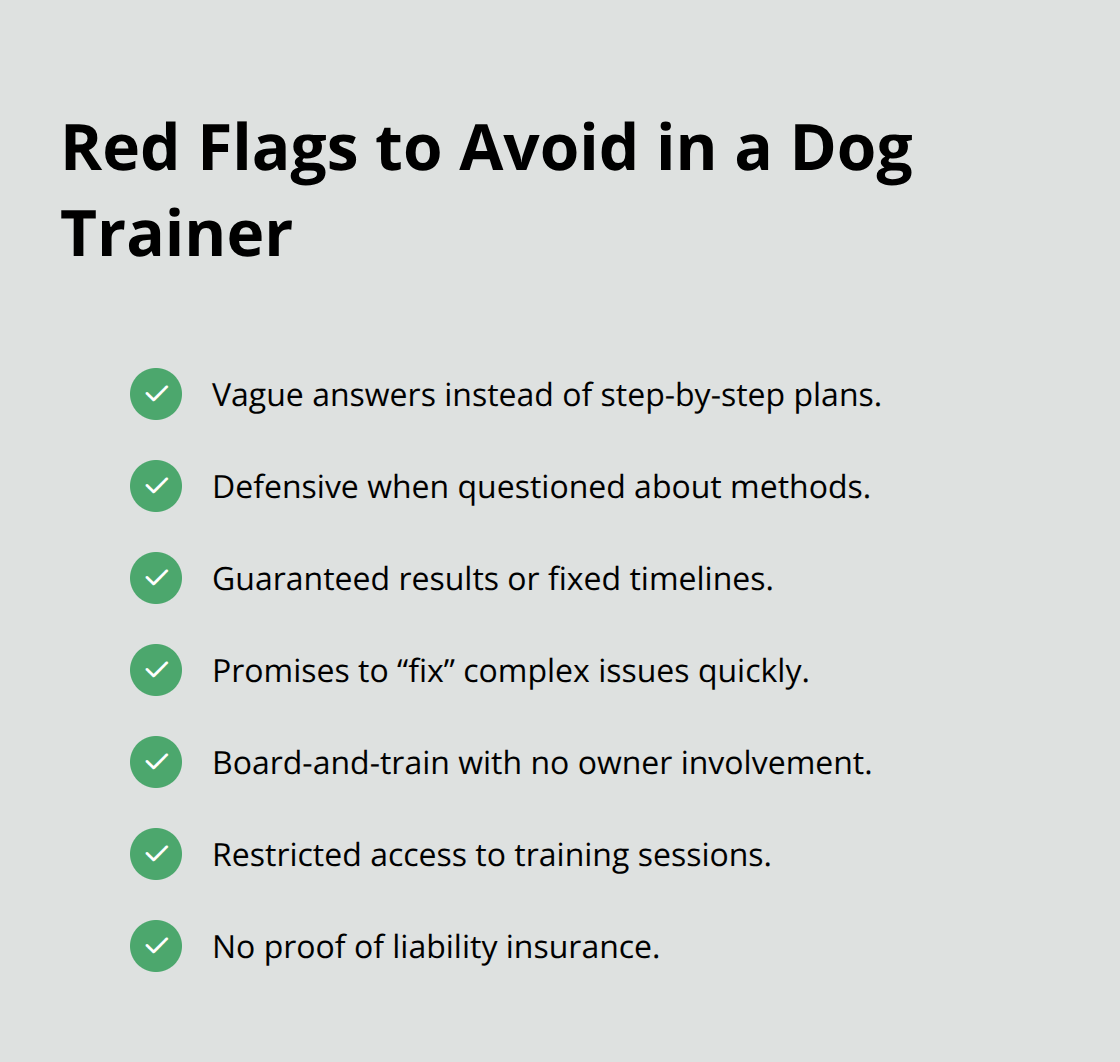
Reputable trainers welcome detailed questions because they’re confident in their methods. They articulate exactly why they choose certain techniques and what science supports them. A trainer who deflects or avoids specifics signals they lack solid reasoning behind their approach. Positive reinforcement training is the standard that reputable trainers follow.
Unrealistic Promises and Quick-Fix Claims
Watch for trainers whose websites or promotional materials use language like “guaranteed results” or “your dog will be fixed in four weeks.” Training doesn’t work that way. A study published in the Journal of Veterinary Behavior found that behavior modification for serious issues like aggression requires ongoing assessment and adjustment over weeks or months, not quick fixes.
Any trainer claiming they can permanently solve a complex behavioral problem in a short timeframe either lies or uses harsh suppression tactics that create new problems later. Similarly, trainers who promise your dog will be perfectly obedient or completely transform their personality set false expectations. Real training involves incremental progress, setbacks, and adaptation. Progress happens gradually, and honest trainers acknowledge this reality.
Board-and-Train Programs Without Your Involvement
A critical red flag appears when a trainer wants to take your dog away for board-and-train programs without involving you in the process. You live with your dog long-term, and if you don’t learn how to maintain the training at home, any progress evaporates the moment the program ends. A quality trainer teaches you alongside your dog.
They explain what they’re doing during sessions, show you how to practice at home, and provide written instructions or videos you can reference. If a trainer suggests you drop off your dog and pick it up later as trained, that signals they prioritize quick money over your dog’s welfare and your success. This approach leaves you without the skills to reinforce what your dog learned.
Restricted Access and Lack of Transparency
Trainers who won’t let you observe sessions or who discourage your involvement are problematic. You have the right to watch your dog being trained and ask questions in real time. A trainer who restricts your access or makes you feel like an inconvenience signals they have something to hide.
Additionally, verify that the trainer carries liability insurance and ask for proof. A professional should carry general liability coverage. If they refuse to provide documentation or claim they don’t need it, that’s a major warning sign they operate outside professional standards. Insurance protects both you and the trainer and indicates they take their business seriously.
Final Thoughts
Choosing the right dog trainer requires you to verify three core factors: credentials that prove competence, specific experience with your dog’s exact needs, and training methods aligned with science and humane practice. A trainer holding CCPDT certification or IAABC credentials has invested in documented training hours, passed rigorous exams, and committed to ongoing education-this matters far more than years of experience alone. Equally important is whether they’ve actually worked with dogs like yours facing the same behavioral challenges, so ask for concrete examples and examine their portfolio carefully.
Your instincts matter more than marketing claims. If a trainer’s methods make you uncomfortable, if they avoid answering direct questions, or if they promise unrealistic results, trust that feeling and keep looking. The right trainer welcomes your involvement, explains their approach clearly, and treats your dog’s emotional wellbeing as seriously as obedience. They’ll teach you how to maintain progress at home because they understand that training only sticks when you’re part of the process.
When you start your training journey, reach out to trainers who meet these standards and ask the specific questions outlined in this guide. Request references from people with similar dogs and similar issues, verify their credentials through official directories, and watch for red flags like vague explanations, guaranteed promises, or resistance to your involvement. The investment in how to choose a dog trainer well pays dividends in your dog’s behavior, your relationship with them, and your household’s peace of mind-explore DogingtonPost for expert advice and resources that support responsible dog ownership.


Recent Comments